
Creator spotlight: Cara Garneau
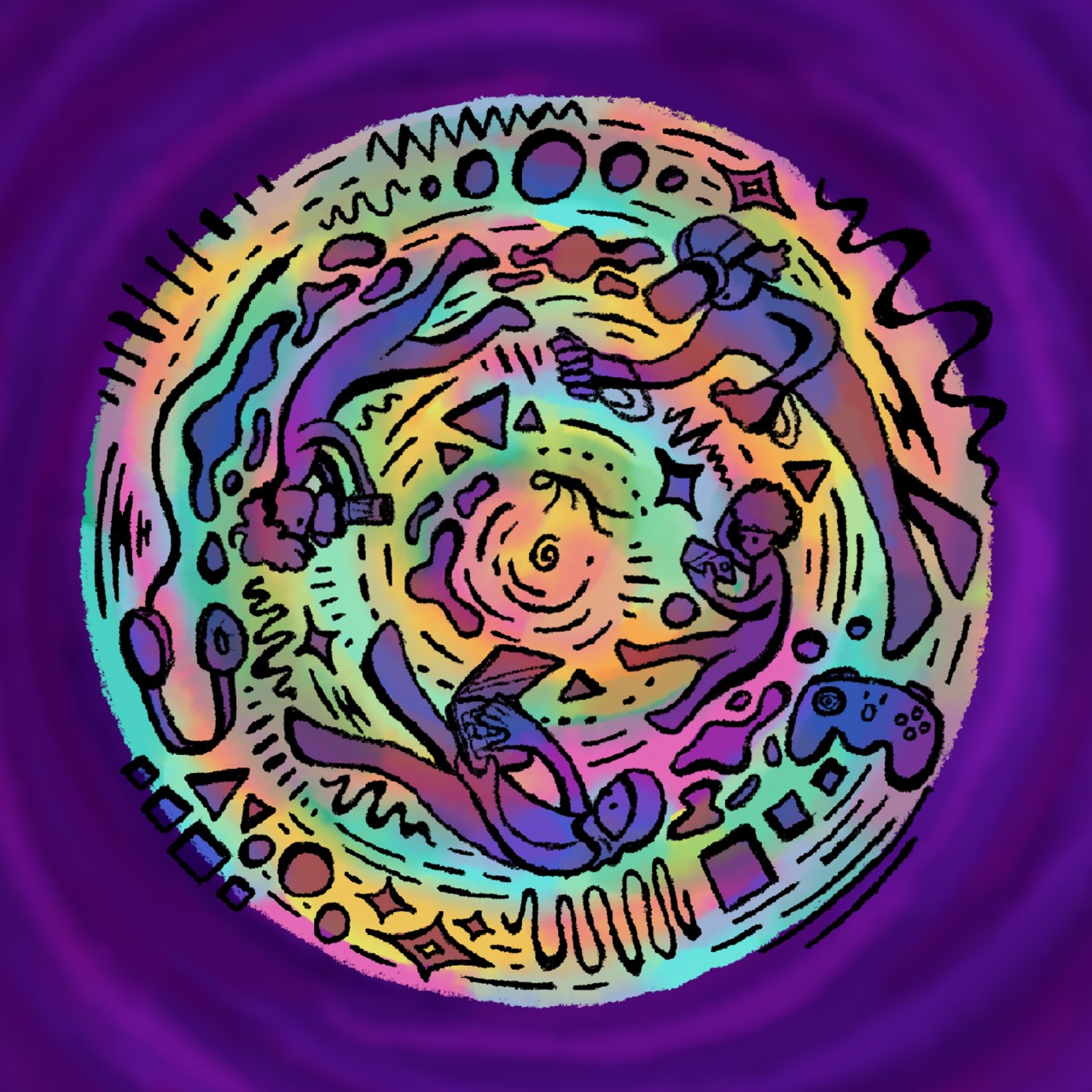

Max Peacock
Dec 10, 2021
As the fall semester comes to a close and exam season begins, the BMPD Storytellers project will be taking a holiday interlude after next week’s Capturing Reality post. Our Connected Future, the first season of the BMPD Storyteller’s podcast will conclude in the new year with five more episodes. This week’s post is a spotlight on the artwork design for Our Connected Future and the creator behind it – third-year BMPD student, Cara Garneau. This article was made in collaboration with Cara, to explore her design process for the podcast cover art and discuss what visual arts mean to her as a storytelling medium.
Once Our Connected Future had received the project green light and it was time to consider art covers, I knew right away that Cara would be the person to ask. I’d been keeping up with Cara’s work on her Instagram account (@crappycara) and quickly became a big fan of her unique illustration style. Her use of colour and character expressions give a fun and playful quality to her art, not unlike Cara herself.
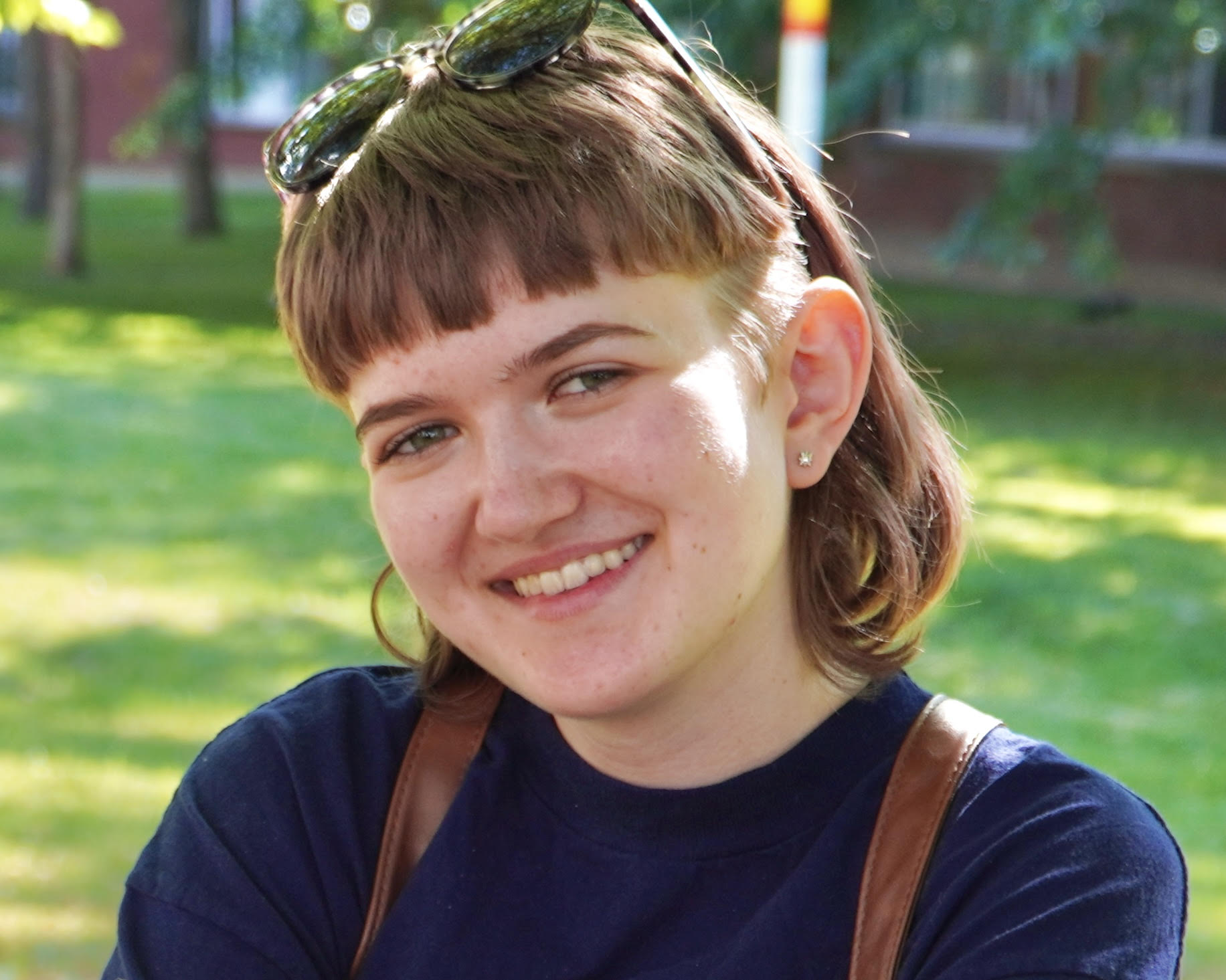
When I reached out to ask Cara if she’d be interested in making the podcast cover art, I asked her to take the design in whichever direction she wanted. I didn’t know what to expect, but I was blown away by the result. I absolutely love the psychedelic depiction of technology and its surreal ability to connect us across space and time. To me, the cover art visually represented a ‘connected future’ in a way I hadn’t imagined yet. To learn more about her creative process, I chatted with Cara:
“I made the decision for this podcast cover art without much of a plan in mind. I was playing around with the different mediums in Adobe Fresco and I used the watercolour tool to make a purple spiral that reminded me of space and wormholes, which I thought suited the theme of this podcast, stereotypically symbolizing the future and advance of technology. I added the rainbow circle in the middle, with figures and objects swirling around, inspired by a 90s aesthetic where every colour and shape just had to be used in a design.
The turn of the century is where technological advancements really began speeding up and becoming commonplace, especially within Web 2.0, so I thought it would be cool to mix that outdated and trippy aesthetic with a modern subject matter. Meanwhile, the wormhole spiral made me think about how with technology, we are in this sort of unique second reality. I find myself getting sucked into it, spending a lot of time online and relying on it for both work and as a creative outlet. I wanted to portray that with the figures I drew, moving around and being sucked into my abstract wormhole. The common movement of everything also gives it that feeling of relatedness and connectedness, as well as the speed and urgency of life governed by technology and productivity.
I hope that when people look at the cover art I made, they can take their own message away from it about what ‘our connected future’ means. What I like about visual arts as a method of communication and storytelling is that it leaves room for others to interpret the media and be guided to reflect and come to their own conclusions about the subject.”
Max Peacock is a third-year student in the Bachelor of Media Production and Design program minoring in Entrepreneurship. He is a digital architect, aspiring philosopher, and optimistic futurist. Max uses digital storytelling to express his entrepreneurial worldview and incite critical reflection about the role of technology in society. He dreams of a future where technology augments the pursuit of a meaningful human life. In his podcast, Our Connected Future, Max explores tech innovation’s ethical implications and role in human progress.
More Podcasts

Episode 8: Media Production and Design
In the final episode of Our Connected Future, Max is joined by BMPD faculty members Vicky McArthur, Katie Graham, and Stéfy McKnight to discuss the program’s mission and evolution over recent years. In their conversation, Max and the BMPD faculty unpack the importance of storytelling skills in the digital age and the type of future the program aims to prepare students for.

Episode 7: Cyberculture
Cyberculture can be defined as the culture based on the use of the internet. Through the rise of social networks, the spread and influence of cyberculture are arguably greater than ever before. However, the complexities of this social phenomenon are often causally related to the governance systems and design choices behind the platforms which carry this culture.
In episode 7 of Our Connected Future, Max is joined by Vanessa Thomas, an interdisciplinary researcher and former sessional instructor at Carleton University to explore attitudes and challenges in web culture. In their conversation, Max and Vanessa discuss their own explorations of the web and reflect on the role of designers in creating online shared spaces.

Episode 6: Immersive Media and Digital Representation
The Carleton Immersive Media Studio (CIMS) engages in theoretical and applied multidisciplinary research concerned with the integration of new and emerging technologies. CIMS leverages innovations in information modeling and virtual reality to bring immersive heritage-focused storytelling to the public sphere.
In episode 6 of Our Connected Future, Max is joined by Stephen Fai, the Director of CIMS to discuss their mission and operations. In their conversation, Max and Steve explore the role of technological innovation in applied research and the necessity of deep thinking and optimism to guide it.

© Copyright 2021. Carleton University School of Journalism and Communication. All rights reserved.