
Part 2 – Facebook Has Had Too Many Facelifts

Ariel Aarenau
Dec 8, 2022 (published February 2, 2023) · 6 min read
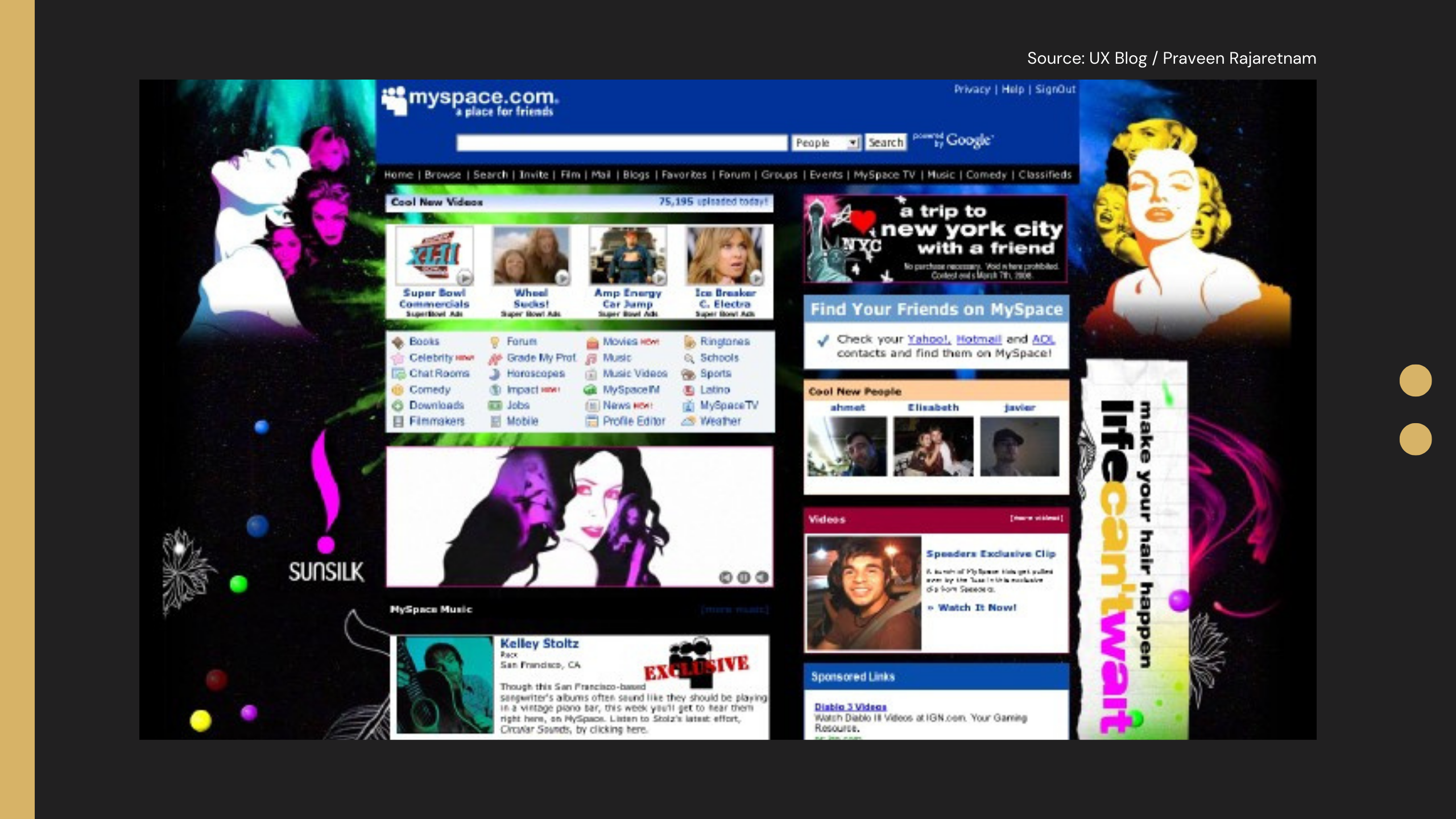
The initial rollout of Facebook was restricted to Harvard undergraduates before it opened to all of the Ivy League schools and, subsequently, all universities and colleges. Facebook initially only allowed users to sign up with a “.edu” email address. Besides the fact that Myspace and others were not limiting who could join, this feature also meant that users had to sign up with their actual identity. The restrictions in who and how users could sign up continued as Facebook opened up to high schools before finally opening the platform to the public in 2006.
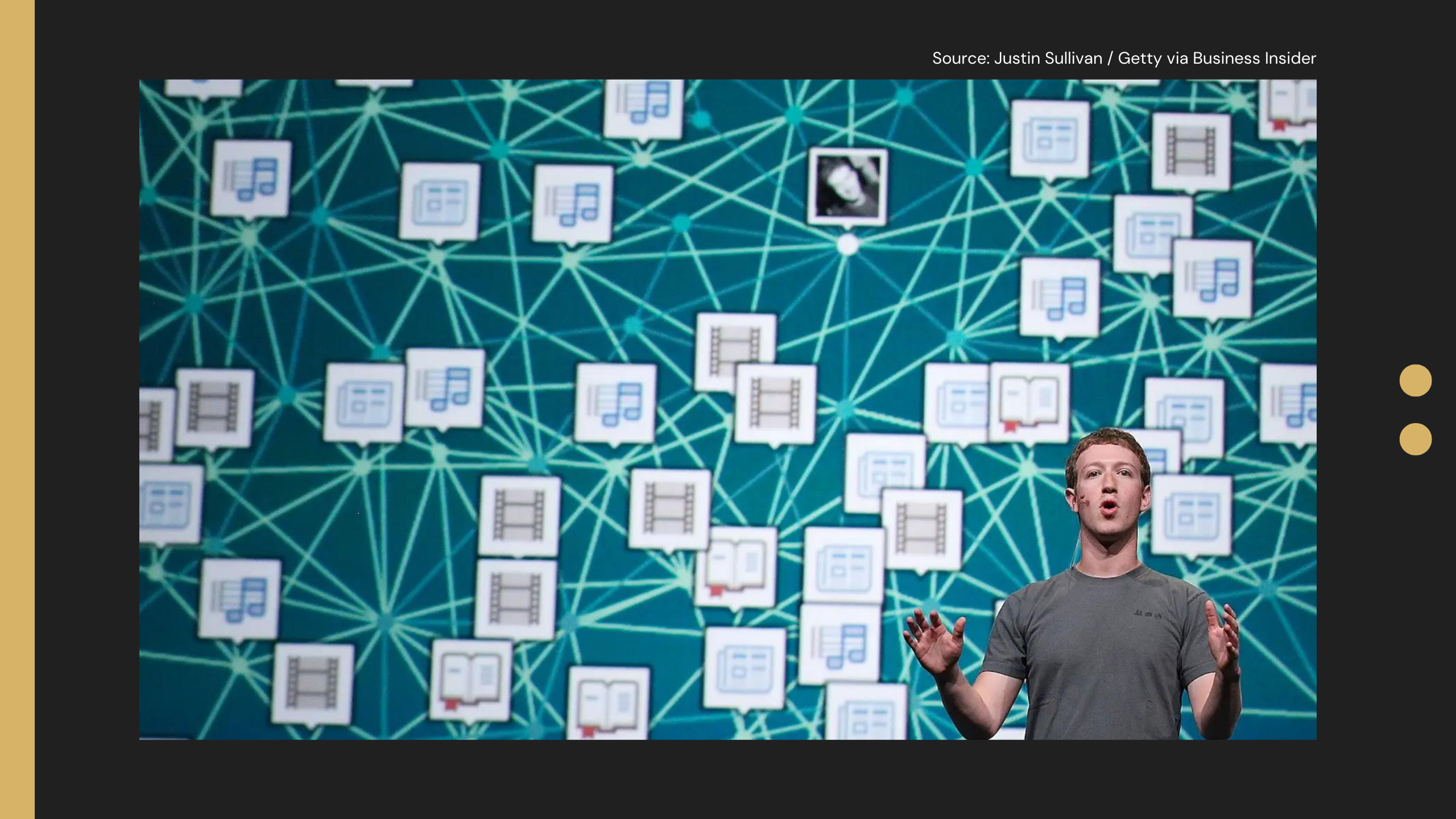
2006 also marked the year of the Newsfeed, a content distribution methodology now as ubiquitous as social media itself. Now known as Feed, Facebook created a revolutionary, pervasive approach to organizing and displaying user-generated content. Feed was a core element and large driver in Zuckerberg’s masterplan to “connect the world” (Miller, 2014). With the platform open to the public and a groundbreaking approach to social sharing in place, Zuckerberg only had one element left to secure “total domination” – a jokingly stated goal of the company’s employees according to reporting by David Kirkpatrick (2011, p. 275). Zuckerberg’s final move to reach social media supremacy was turning Facebook into a “social graph.”
Zuckerberg popularized this term at the Facebook F8 conference in 2007 (Kirkpatrick, 2011). Simply put, the social graph represents the social relations between entities, and it became Facebook’s ethos for many years. It is “the interconnections between Facebook users and their friends, their friends of friends, and all their interests and activities” (Robison, 2022). It is the glue — or graph — that made Facebook so powerful (Ibid).
Facebook now has close to 3 billion monthly active users (MAUs) – 39.8% of the world’s population (Statista, 2022). As proud as Zuckerberg was to share these numbers in the latest earnings call in October 2022, he did not attribute any of his success to the social graph (Meta Platforms Inc., 2022). In fact, he never uttered those words. Looking back at previous earnings calls, Zuckerberg went from using the term dozens of times to a complete removal of it from his vocabulary. The change in his vernacular points to both changes in user behaviour and preferences, as well as lack of differentiation in Facebook’s model.
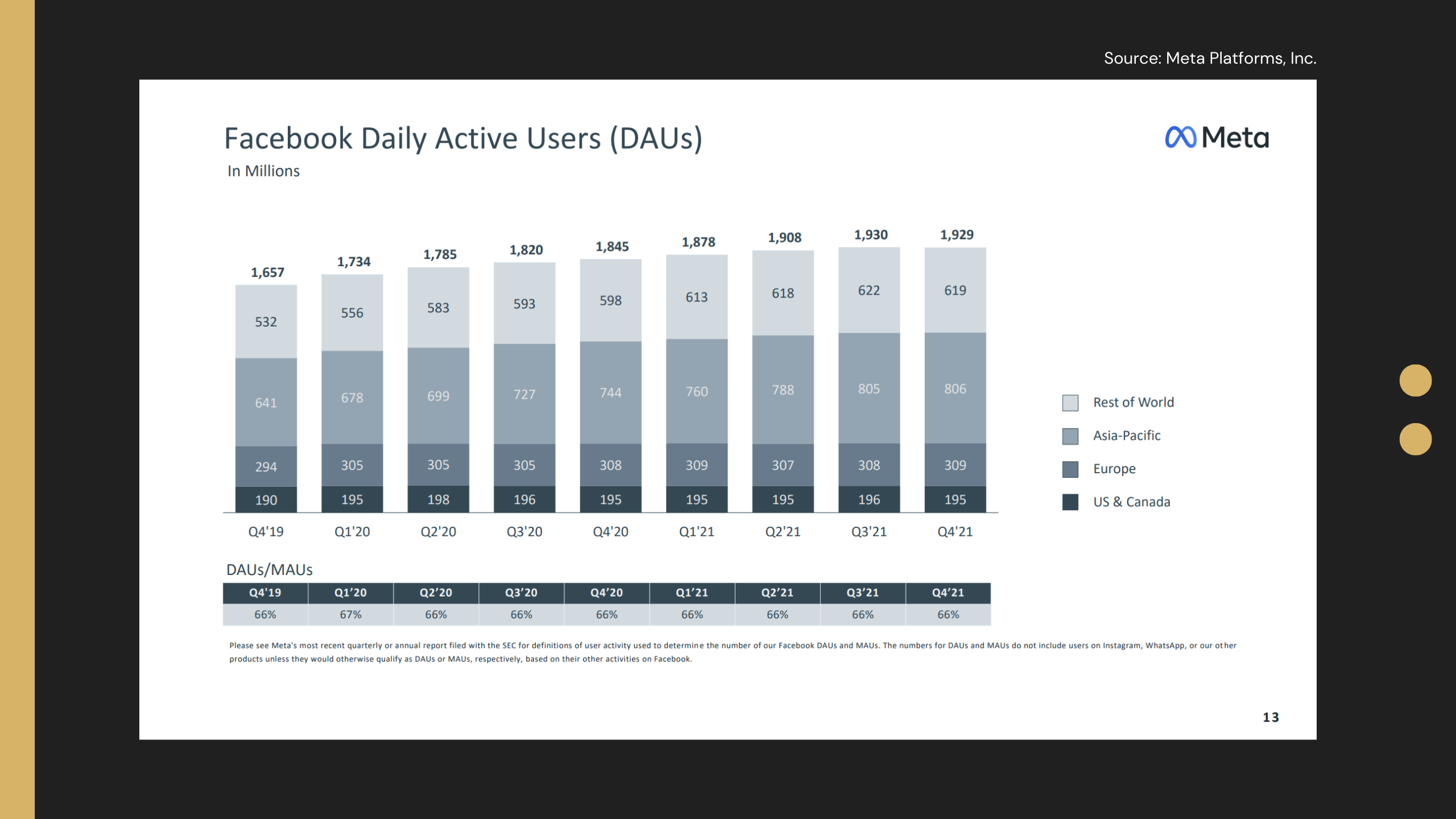
Sarah Frier, author of No Filter: The Inside Story of Instagram, notes in her book the concern Facebook and its executives had about growth at Instagram coming at the cost of its own platform (2020). It appears that apprehension may have been warranted. In 2021, the number of users on Facebook declined for the first time (Ghaffary, 2022). While the feature and capability overlap seems to be increasing every day, users are beginning to ask themselves why they need both Instagram and Facebook.
Looking at the platforms today, it seems as though Meta is simply copying and pasting the Instagram product press releases and applying them to Facebook. Case in point: both platforms now give users the ability to share Stories and Reels, and Facebook did not even bother giving these once Instagram-based features a different name on its platform. Facebook’s once unique Feed and Timeline features are now ubiquitous with social media. Finally, Facebook’s supremacy in social graphing is now shared with Instagram. Simply put, Facebook lacks differentiated storytelling capabilities and has largely pulled away from the constraints and restrictions that once made it an appealing site to users. The app presently operates as a catch-all service, aiming to service its existing user base by providing them versions of hit features, capabilities, and product extensions that are found in other apps and, consequently, not purpose-built to serve their community. Facebook, which truly was once something special, now adopts everything and offers nothing different or better than its peers.
Ariel Aarenau is in his final year of the Bachelor of Media Production and Design program at Carleton University where he is also minoring in Business. The fusion of digital media, design thinking, and innovative business technologies combines both his strengths and passions. He currently works at Deloitte as a Business Analyst focusing on digital strategy, innovation, and transformation advisory projects. Prior to joining Deloitte, Ariel held roles in Multimedia Services at the House of Commons of Canada, Marketing and Business Development for Deloitte Israel, and the Digitally Assisted Storytelling division of Carleton Immersive Media Studio.
Frier, S. (2020). No Filter: The Inside Story of Instagram. Simon & Schuster.
Ghaffary, S. (2022, February 3). Facebook is shrinking. Vox. Retrieved November 6, 2022, from https://www.vox.com/recode/2022/2/2/22915110/facebook-meta-user-growth-decline-first-time-metaverse-mark-zuckerberg-tiktok-competition-earnings
Kirkpatrick, D. (2011). The Facebook Effect: The inside story of the company that is connecting the world. Simon & Schuster Paperbacks.
Lagorio, C. (2006, July 12). MySpace pulls ahead in Page View Race. CBS News. Retrieved November 6, 2022, from https://www.cbsnews.com/news/myspace-pulls-ahead-in-page-view-race/
Meta Platforms Inc. (2022, October 26). Meta – Q3 2022 Earnings. Meta Investor Relations. Retrieved November 6, 2022, from https://investor.fb.com/investor-events/event-details/2022/Q3-2022-Earnings/default.aspx
Miller, J. (2014, February 24). Zuckerberg: Facebook’s mission is to ‘connect the world’. BBC News. Retrieved November 6, 2022, from https://www.bbc.com/news/technology-26326844
Robison, K. (2022, October 28). Has Zuckerberg lost faith in his beloved social graph? Fortune. Retrieved November 6, 2022, from https://fortune.com/2022/10/28/mark-zuckerberg-tiktok-panic-blindingly-obvious-because-of-something-he-wont-say/
Singh, S. (2022, June 22). Rediscovering the social graph. Medium. Retrieved November 6, 2022, from https://medium.com/@sameer_singh17/rediscovering-the-social-graph-8bd3960988ac
Statista. (2022, August 1). Facebook: Global penetration by region 2022. Statista. Retrieved November 6, 2022, from https://www.statista.com/statistics/241552/share-of-global-population-using-facebook-by-region/
Wayback Machine. (n.d.). Web archive – thefacebook.com – 12 Feb 2004. Web Archive – Internet Archive. Retrieved November 10, 2022, from https://web.archive.org/web/20040212031928/http://www.thefacebook.com/
More Stories

Part 5 – With Facebook, Instagram, and Twitter in Crisis, A New Generation of Apps Emerges
With Facebook, Instagram, and Twitter each in a state of disrepair, it should be no surprise that competitors are not just emerging but taking off. The first and most prominent competitor is TikTok, an international version of Douyin, which was released in the Chinese market in September 2016. TikTok was then released worldwide following a merger of its parent company with Musical.ly on August 2, 2018.

Part 4 – A Little Birdy Told Me Twitter Is Lost
I write this post amidst ongoing chaos at Twitter HQ. It is November 21, 2022, and a few dozen more Twitter employees have flown away from the nest. Elon Musk is the company’s “Chief Twit”, and his latest decision to reinstate former President Trump’s Twitter account has the world chirping. Since Musk’s ownership, Twitter has shed 60% of its employees between layoffs and attrition, cut 80% of its contractors, and experienced a humiliating Twitter Blue product reconfiguration.

Part 3 – Can We #ThrowbackThursday Our Way to the Old Instagram?
Founded in 2010 by Kevin Systrom and Mike Krieger, Instagram was an instant success. The app reached over one million users just two months after its release and reached ten million users in its first year. In some respects, its success should have been anything but a surprise: Mark Zuckerberg was an early courter, Jack Dorsey was an avid user, and Marc Andreessen and Chris Sacca had advised from the sidelines.

© Copyright 2022. Carleton University School of Journalism and Communication. All rights reserved.