Two-eyed seeds
GROUP MEMBERS
- Tanya Nguyen
- Brendan Currie-O’Brien
- Zach Wroe
- Joelle Lui
INDUSTRY PARTNER
Multimedia storytelling with Indigenous youth and post-secondary students
PROJECT DESCRIPTION
Two-eyed Seeds: Indigenous Storytelling Project aimed to foster Indigenous-settler relationships through collaboration and relationship-building. Working in groups with Carleton Neuroscience students, the team collaborated with two Thunder Bay Indigenous Youth organizations — Keewaytinook Okimakanak (KO), and the Regional Multicultural Youth Centre (RMYC) to decolonize media spaces and give agency to the Indigenous youth voices. Unlike other capstone projects, Two-eyed Seeds focused not on creating a tangible digital media project, but on connecting historically disconnected communities, helping change the storytelling landscape to include more voices, and ensuring these relationships can continue going forward while following a community-based participatory research approach. The final deliverable was a multimedia website that included reflections, graphics, photos, and videos. This deliverable was appropriate because it allowed for different forms of storytelling and a space for them to be accessed by the Indigenous communities, which the students collaborated with.
GROUP MEMBERS
- Tanya Nguyen
- Brendan Currie-O’Brien
- Zach Wroe
- Joelle Lui
INDUSTRY PARTNER
Multimedia storytelling with Indigenous youth and post-secondary students

final project
Transcript: The Truth and Reconciliation Commission defines reconciliation as an ongoing process of establishing and maintaining respectful relationships. This Indigenous storytelling project involving community-based research with Indigenous youth is a critical step towards that reconciliation. But we have to recognize that there’s a history of using Indigenous peoples as subjects and research and extracting their knowledge without giving anything back. Considering this, we adopted a two-eyed seeing approach valuing both Indigenous and Western ways of knowing and doing. By engaging with Indigenous youth and incorporating their perspectives and insights, this project aims to contribute to a more inclusive research process.
Involving Indigenous youth is important. They’re not only the future of Indigenous communities, they’re the future of reconciliation in this country as a whole. With this project, we hope to promote positive change through storytelling. The goal is to elevate their narratives and give them agency over their stories.
Indigenous stories and voices have been silenced, erased and misrepresented since the conception of Canada. This project, utilizing the knowledge from our research and ethics training, and the media skills learned from our undergraduate program, is meant to serve as a guide for future students and settlers to contribute to undoing this legacy.
On this website you’ll find a collection of our experience as Carleton University Media Production and Design students collaborating with neuroscience students and two Indigenous community organizations to create a multimedia storytelling project. This website is a hub of our project goals, approach and outcome for fostering Indigenous settler relationships through collaboration and community building.
Development Process
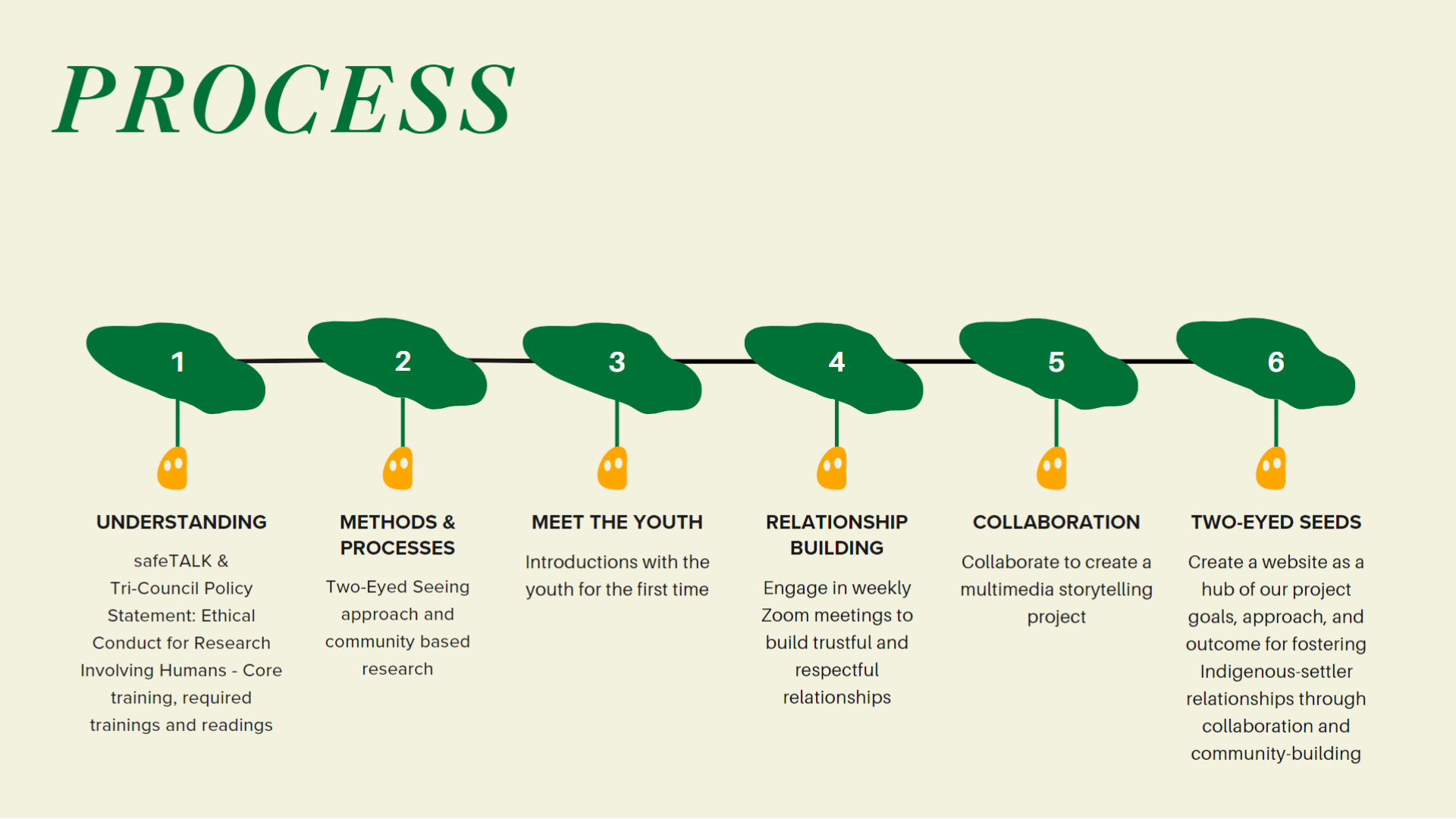
Project development began with research and training to properly prepare for a community-based participatory research project involving Indigenous youth. A significant part of the preparation was to understand the histories and relationship between researchers and Indigenous communities. Since the project included community engagement with a traditionally marginalized (both by wider society and academia) youth community with the goal to generate some findings from the work and experience, there was a need to understand how good intentions can still cause harm or only token reconciliation within the context of academia. The particular capstone project focused on the process more than the outcome.
Community-Based Participatory Research
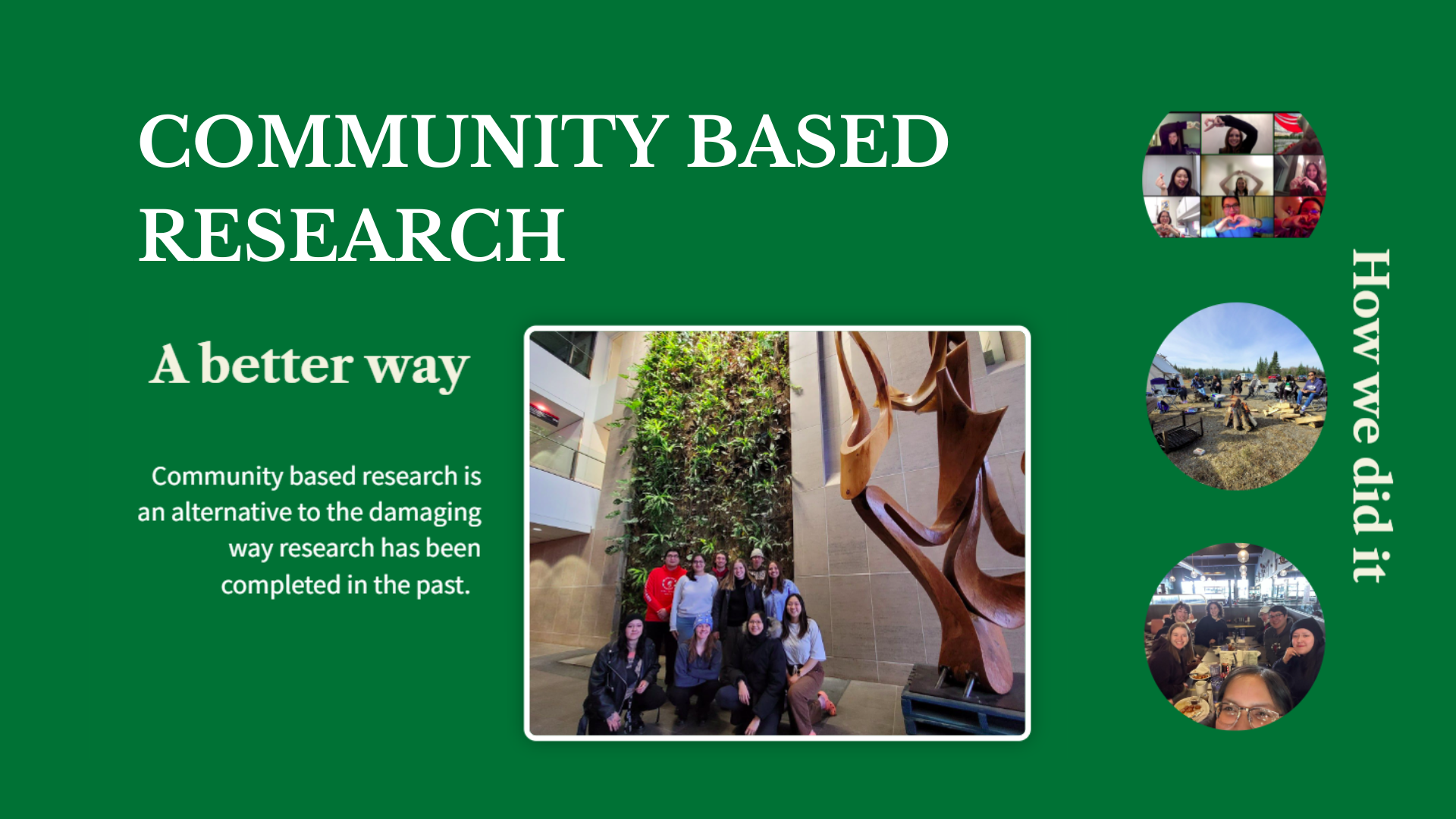
Community-based participatory research respects the interests of the community, especially when working with Indigenous communities. This approach involves researchers and community members as a team for decision-making throughout the process from developing research questions and how the project goes. It also involves developing tools and methods, collecting, analyzing, and interpreting the data, as well as developing conclusions and disseminating results. When working with the Indigenous youth, they will decide what interests and direction the project goes. We will just facilitate and provide our support. Ultimately, the project belongs to the community and they will determine how it is disseminated.
Two-eyed seeing approach
Etuaptmumk, also known as the two-eyed seeing approach, is the concept of approaching the world with the Indigenous lens on one eye and the Western lens on the other eye. The approach allows for the two distinct ways of knowing to remain distinct while working together. Explore the interactive infographic to learn about the approach.
Reflection
The following video provides a reflection from the four group members on their experience.