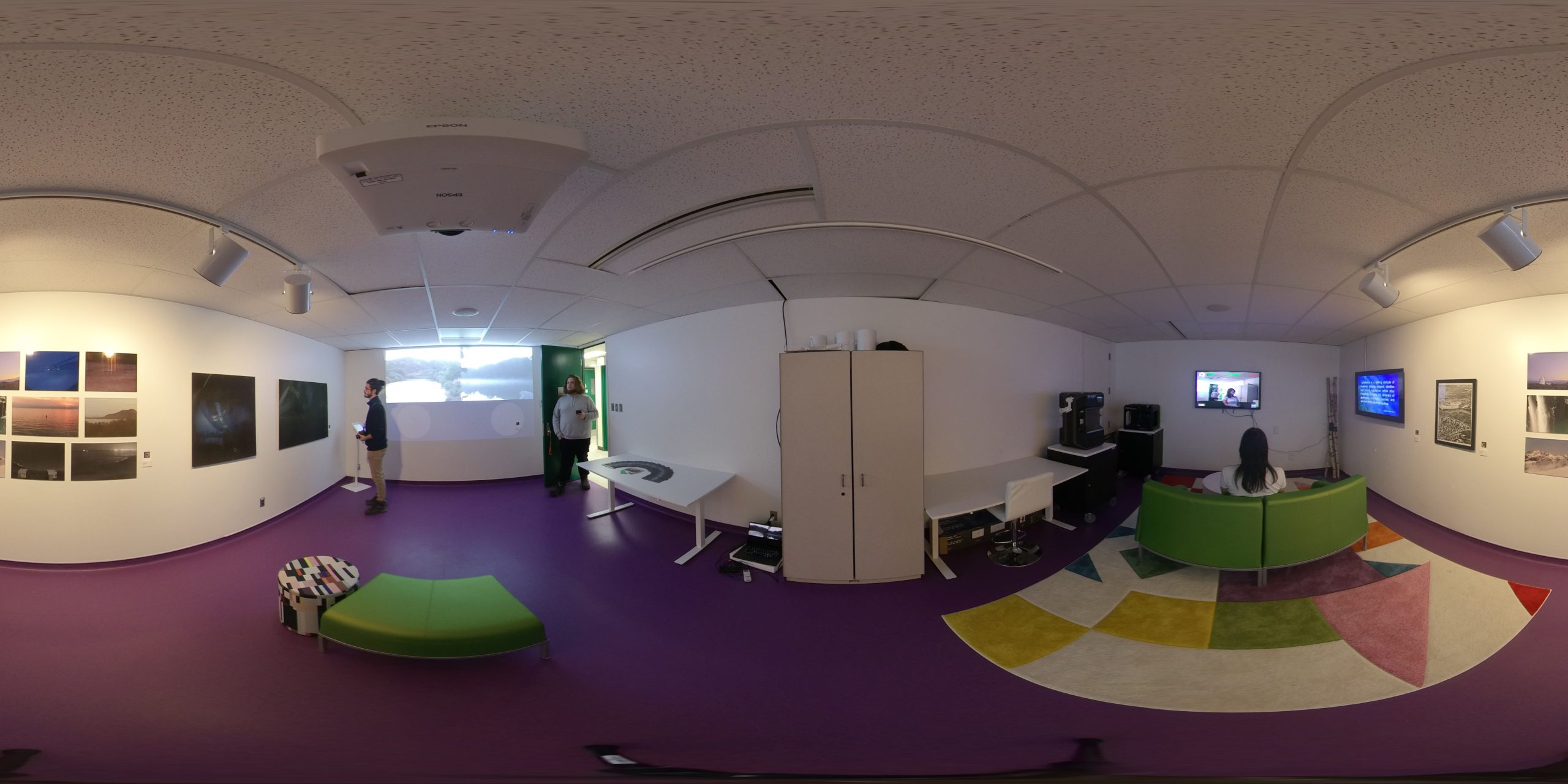
watching territory
SurveillART
PROJECT DETAILS
“Extending art to exist beyond the limitations of a physical space.”
Our goal is to create a digital archive of the “watching territory” exhibition to preserve and extend the impact of the artists’ powerful narratives. By capturing and safeguarding these works in a digital space, we aim to provide an accessible platform that transcends the physical limits of the exhibition.
During the exhibition, we introduced interactive augmented reality (AR) logos inspired by the SurveillART branding, transforming static symbols into dynamic portals of information. Visitors could scan these logos in real time to active AR displays that revealed deeper insights into the artwork and artist(s).
For long-term archival purposes, we used 360-degree camera technology to capture the exhibition, creating an immersive virtual walk-through that preserves the space’s atmosphere and intent. This digital recreation integrates text, visuals, audio narration, and tutorials, providing viewers with an accessible and engaging way to explore the exhibition even after its physical closure. The archive will remain hosted on the SurveillART website, ensuring continued access to its powerful narratives.
More than just a digital archive, this interactive resource invites ongoing engagement with the exhibition’s critical themes—colonialism, surveillance, and territory—encouraging reflection on their intricate intersections and lasting consequences.

Group Members
- Nadja Radakovic
- Tristan Yelle
- Connor Eales
- Elisha Côté
- Zedong Lin

PARTNER
SurveillART
As part of SurveillART, a co-laboratory at Carleton University, Dr. Stéfy McKnight and research assistant Kayleigh Lewis curated the Watching Territories exhibition, bringing together Indigenous and settler artist-scholars to critically reflect on the history of territory, and its deep connections to surveillance. Through art, the exhibition invites viewers to engage with the complexities of territory, to examine how territory functions as a tool of settler colonialism—reinforcing heteronormative, patriarchal, and capitalist structures.
Showcase of Work